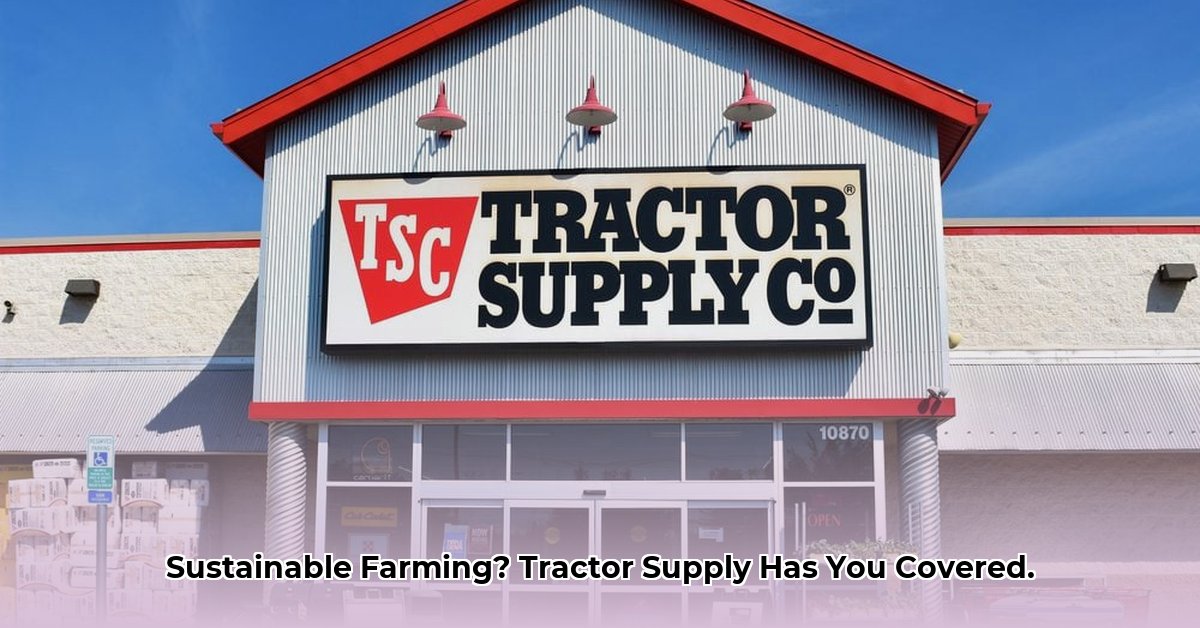
Looking to cultivate a thriving and environmentally responsible farm or garden in Ada, Oklahoma? Tractor Supply can be a valuable resource, but understanding its role within a broader sustainable agriculture strategy is key. This guide explores Tractor Supply's offerings, highlights its limitations, and provides actionable steps to integrate its resources into your sustainable farming plan. For mobile chicken coop ideas, check out this helpful guide: Chicken Tractor Plans.
What Tractor Supply Ada, OK Offers Sustainable Farmers
Tractor Supply offers a wide array of products that can support sustainable practices. You’ll find seeds for diverse crops, efficient tilling tools, fencing supplies, livestock management tools, and even smart watering systems crucial for water conservation. However, a crucial caveat exists: Tractor Supply doesn't prioritize certified organic products or consistently highlight eco-friendly packaging. This lack of clear labeling can hinder informed, sustainable purchasing decisions.
Don't get us wrong: the store's convenient location and generous hours are invaluable for busy farmers and gardeners needing supplies quickly. But the absence of clear sustainability certifications makes discerning truly sustainable options challenging. This raises critical questions: "Are these seeds organically grown? Was this fertilizer produced sustainably?" It's up to the consumer to conduct the necessary research.
Assessing Tractor Supply Ada, OK's Contribution to Sustainable Agriculture
Tractor Supply acts as a convenient one-stop shop, but it doesn't explicitly champion sustainable agriculture. Its strength lies in broad product selection. However, the lack of widespread organic certifications and eco-friendly packaging remains a significant weakness, hampering efforts to assess the environmental impact of many products. The tools are there, but verifying their sustainable origins requires diligence.
For instance, while seeds are available, organic certification isn't always clearly indicated. Similarly, some pesticides may not represent the most environmentally friendly options. This isn't due to malicious intent but reflects the prevailing market focus on yield maximization. However, growing consumer demand for sustainability may eventually shift this dynamic.
Making Tractor Supply Ada, OK Work for Your Sustainable Farming Goals: Actionable Steps
Here's how to maximize Tractor Supply's utility while adhering to sustainable principles:
Diversify Your Crops: Utilize their seed selection to cultivate diverse crops. This approach benefits soil health, pest and disease resistance, and overall farm productivity. Crop rotation forms the bedrock of sustainable farming.
Invest in Efficient Watering Systems: Explore their irrigation systems. Drip irrigation, for instance, significantly reduces water consumption compared to traditional methods. This is vital for water conservation.
Practice Integrated Pest Management (IPM): IPM employs natural pest control methods, reducing reliance on harmful chemical pesticides. Explore Tractor Supply's IPM-supporting tools and supplies, such as beneficial insects and organic pest control options.
Prioritize Local Sourcing: While not a Tractor Supply emphasis, enquire about locally sourced products. Supporting local producers minimizes your carbon footprint and bolsters your community's economy.
Advocate for Change: Demand more sustainable options from Tractor Supply. Contact the store or corporate office directly; increased consumer demand encourages retailers to respond.
Who Else Can Contribute to a More Sustainable Future?
Sustainable agriculture requires a collaborative effort. This includes:
Tractor Supply Co.: The company should conduct consumer surveys to understand the demand for sustainable products. A comprehensive sustainability strategy requires sourcing eco-friendly products and providing customer education resources.
Local Government: Local governments can support sustainable farming through educational programs and grants for farmers adopting sustainable practices, and promotion of local food systems.
Consumers: Consumers must demand transparency from retailers by asking questions, researching products, and supporting businesses that align with their values.
Weighing the Risks and Rewards of a More Sustainable Approach
Sustainable practices present both opportunities and challenges:
| Potential Risk | Likelihood | Potential Impact | Mitigation Strategy |
|---|---|---|---|
| Low consumer demand for sustainable products | Moderately Low | Low to Medium | Conduct market research to understand consumer preferences and willingness to pay. |
| Sourcing challenges for certified products | Moderate | Medium | Build relationships with local and certified suppliers; explore alternative sourcing options. |
| Increased operational costs | Moderate | Medium to High | Explore government incentives and subsidies; optimize supply chains. |
| Negative perception from unmet sustainability goals | Low to Moderate | Low to High | Set clear, achievable sustainability goals, communicate progress transparently. |
Ultimately, Tractor Supply serves as a starting point. Building a truly sustainable agricultural system necessitates collaboration between farmers, consumers, retailers, and local governments. This collective effort paves the way for a more environmentally friendly and resilient food system.